
Full Code Medical Simulation
Full Code Medical Inc.Medical
4.1588.00 Reviews
- Version
- 3.7.2
- Installs
- 1.00M
- Age Rating
- Everyone 10+
Screenshots
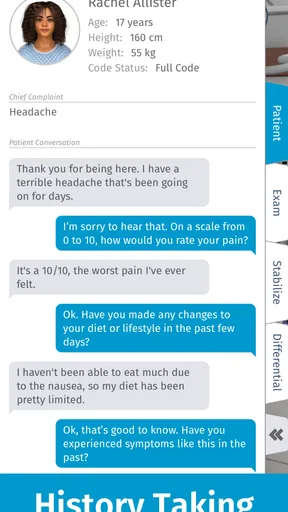
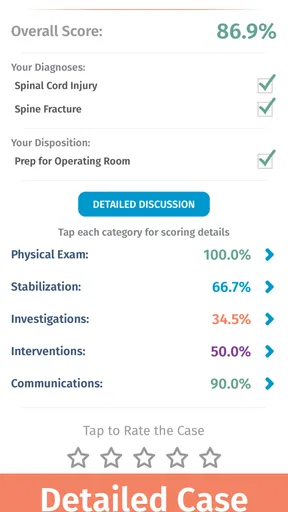

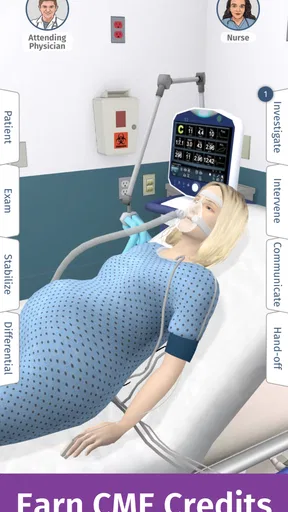
Our Review of Full Code Medical Simulation
 Analysis by Appyee
Have you ever wondered what it's like to be a medical professional making critical decisions in a high-pressure environment? Well, now you can get a taste of that intense experience right from your smartphone with Full Code Medical Simulation. This app is a game-changer for both aspiring medical practitioners and curious minds. Let's dive into what makes this app a must-have on your device.
My main reservation is that the drama of an emergency-room simulation can make it feel more like a game than a dependable study tool. Used thoughtfully, though, Full Code gives medical learners a useful place to rehearse how they approach a case: gather information, decide what matters, and consider what to do next. I would treat it as a supplement to formal teaching, not as a substitute for supervised clinical practice or medical advice.
Where the simulation earns its place
The best reason to try it is the chance to practise clinical reasoning without putting a real patient at risk. When I work through a case, I have to make choices rather than simply read an explanation. That difference matters: a textbook can tell me what a diagnosis looks like, while a simulation asks me to decide which clues to pursue and what information I still need.
That makes the app particularly useful for a short study session between classes or after a lecture. Instead of rereading notes passively, I can use a virtual case to check whether I can apply a concept. If I reach a wrong conclusion, the resulting feedback can prompt me to revisit the reasoning behind it. I would still verify clinical details against course materials and guidance from qualified instructors; a convincing simulation is not a guarantee that every lesson transfers directly to practice.
The format also suits learners who want a first look at the pressure and uncertainty involved in emergency care. It can help someone interested in medicine understand that clinical work is not just recognizing a familiar condition. The process involves choosing what to investigate and weighing possible actions while the situation develops. That is a more useful glimpse than a purely passive overview, even though a phone cannot reproduce the responsibility or teamwork of a real clinical setting.
How I would use it between study sessions
A practical routine is to play one case with a learning goal in mind, then pause afterward and write down which clues led to the decision. That small reflection step turns the session from a sequence of clicks into a review of one’s own thinking. I would note what I knew, what I assumed, and what I should look up before moving on. This is especially helpful if a case feels easy: a quick result is less valuable than understanding why the conclusion made sense.
For example, imagine a medical student with a short break before a lecture on emergency assessment. They could work through a case, focus on how symptoms and test results shape the next decision, and then compare their reasoning with class notes later. The useful part is not pretending to have treated a patient; it is spotting gaps in knowledge while the stakes are virtual. If the session leaves a question unresolved, the student can bring that question to a tutor rather than treating the app as the final authority.
There is also a trade-off in how quickly someone moves through cases. Rushing can make the experience feel exciting, but it encourages guessing and makes feedback harder to learn from. Taking time to consider why a test or treatment is appropriate is slower, yet it is the better choice for education. I would use the app in focused bursts and stop when I am no longer paying attention, rather than treating a high case count as proof of progress.
How it compares with other ways to learn medicine
Compared with a medical reference app, a simulation is more active: it asks for decisions instead of mainly offering material to consult. Compared with textbooks or lecture notes, it can make the connection between symptoms, investigation, and treatment feel more immediate. But those resources are easier to use for systematic review, and an instructor can explain why a particular line of reasoning is appropriate in a way a screen-based case may not.
It is also different from real clinical placements and skills training. Those provide observation, feedback from people, and contact with the complexity of actual care; a phone exercise cannot replace them. I see Full Code as sitting between reading and supervised practice: a way to test ideas in a more interactive setting, while keeping formal teaching and clinical guidance as the foundation. If someone needs a reliable reference for a real patient, this is not the tool I would reach for.
Before making it part of a regular routine, it is sensible to consider the cost model. The app is free to download, while in-app purchases range from $3.99 to $99.99 per item. I would first decide whether the available experience fits my study habits, then consider any purchase carefully rather than assuming every learner needs to pay. It is also a medical-learning product, not an emergency service, so anyone facing an actual health concern should seek appropriate professional care instead of opening a simulation.
Diving into the World of Medical Simulation
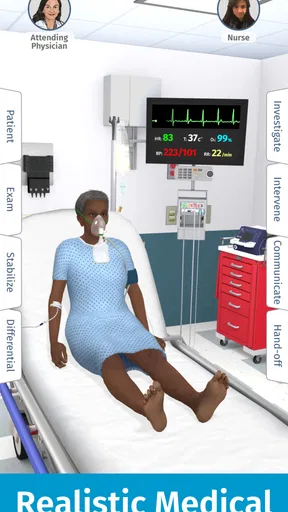
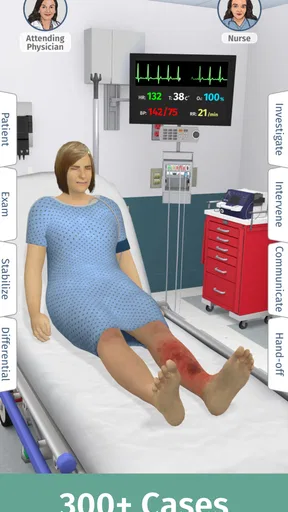
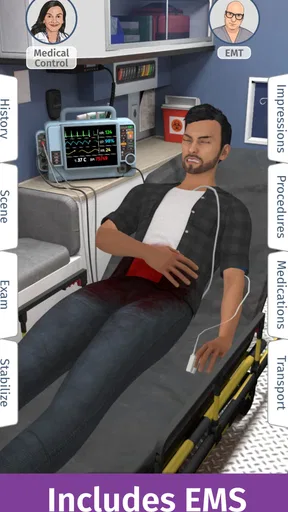
Full Code Medical Simulation is an immersive app that places you in the shoes of a healthcare provider in an emergency room. The app is designed to simulate real-life scenarios that medical professionals face daily, from diagnosing mysterious symptoms to deciding on the best treatment plans for critical patients.
What really stands out is how the app manages to replicate the high-stakes environment of a hospital. You're given a series of patient cases, each with unique symptoms and histories, and it's your job to figure out what's going on. It's like being on an episode of a medical drama, but with a lot more responsibility and less dramatic background music.
A Deep Dive into Features
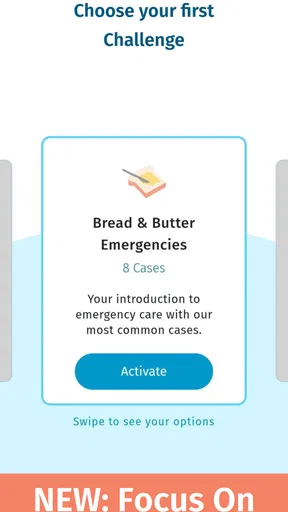
The app offers a wide range of features that are both educational and thrilling. You start by selecting a patient case. Each case presents you with a virtual patient who has a set of symptoms. The challenge is to diagnose the condition accurately and decide on the treatment.
One of the most striking features is the realistic approach to medical procedures. You can order tests, interpret results, and administer treatments. Whether it's prescribing medication or performing CPR, every decision is in your hands. The app even provides feedback on your choices, helping you learn from mistakes without any real-world consequences.
The learning curve is pretty smooth, thanks to the intuitive interface. Even if you're a newbie to the medical field, the app guides you through the basics before throwing you into more complex scenarios. It's like having a mentor by your side, nudging you in the right direction.
Still, I would keep expectations calibrated. A virtual patient cannot capture every ambiguity of an actual emergency, and a simplified sequence of actions may encourage a sense of certainty that real care rarely allows. The feedback is most valuable as a prompt to investigate a concept, not as a certification that a user is ready to make clinical decisions independently. Beginners may enjoy the accessible presentation, but learners without medical background should avoid treating an entertaining case as a substitute for professional instruction.
Who is it for?
If you're a medical student or a healthcare professional looking to hone your diagnostic skills, this app is a goldmine. It offers a safe space to practice and learn without the pressure of real-life repercussions. But it's not just for the pros. If you're someone fascinated by medicine, this app offers a unique insight into the day-to-day challenges faced by doctors and nurses.
Parents might also find it a great tool for kids interested in pursuing a career in medicine. It's educational, engaging, and, most importantly, fun. It's like a medical school crash course but way more interactive and without the student loans.
I would especially recommend it to learners who already have some course context and want to apply it actively. A student preparing for a discussion, a clinician revisiting diagnostic habits, or a curious reader who enjoys reasoning through medical scenarios may find the format rewarding. For a child, I would use it alongside an adult’s guidance and explain that simulated decisions are not instructions for responding to a real emergency. Anyone looking for a simple wellness tracker, a medicine reminder, or a reference for personal symptoms should choose a different kind of app.
Real-life Impact
One of the most commendable aspects of Full Code Medical Simulation is its potential real-world impact. By providing a platform for practice, it helps users build confidence and competence in handling medical emergencies. The app is continuously updated with new cases and scenarios, ensuring that users always have fresh content to explore and learn from.
- Interactive learning with real-time feedback.
- A broad spectrum of cases covering various medical fields.
- Regular updates keep the content relevant and engaging.
To get more value from that feedback, I would avoid using a single outcome as a score of overall ability. A useful workflow is to replay the reasoning mentally after finishing: identify the finding that changed your view, consider what alternative explanation you nearly chose, and make a note of any unfamiliar term or treatment to check with a trusted learning resource. This turns a case into a compact study prompt instead of a one-off challenge. It also helps separate what the simulation made engaging from what a learner has actually understood.
Full Code Medical Inc. develops the app, which sits in the medical category. It is free to install, has an Everyone 10+ content rating, and has reached over one million installs. Its average rating is 4.3 from around 6,400 ratings, with 528 reviews. The current version is 3.6.1, and it requires Android 8.0 or later. Those details make it accessible to a substantial Android audience, but the rating should be read as a broad user signal, not evidence that the app is appropriate for every level of medical training.
One practical question is whether it is suitable for casual use or only for formal study. I think it can work either way, provided the user understands the difference: a curious newcomer can explore the decision-making format, while a student can use cases to reinforce lessons. The more serious the learning goal, the more important it becomes to check the reasoning against coursework and qualified teaching. Another question is whether it can replace a course or clinical experience; in my view, it cannot. It is best treated as an interactive supplement, not a shortcut around structured education.
Final Thoughts
In a nutshell, Full Code Medical Simulation is more than just an app — it's an experience. Whether you're in the medical field or simply fascinated by it, this app offers a rich, engaging, and educational experience that's hard to match. It’s challenging, rewarding, and a little bit addictive, in the best possible way.
So, if you're up for a challenge that tests your wits and sharpens your medical knowledge, give Full Code Medical Simulation a try. You might just find yourself hooked on saving virtual lives, one case at a time.
My verdict is positive with an important boundary: I would recommend it to medical learners who want an active way to practise case reasoning, and to curious users who understand that the experience is educational entertainment rather than real clinical training. I would skip it if I needed patient-specific advice, a comprehensive reference, or hands-on instruction. Used with reflection and reliable teaching materials, it can make spare study time more engaging; used as an authority on its own, it asks for more trust than a simulation should receive.
Verdict
Strengths of Full Code Medical Simulation
- Realistic medical scenarios enhance learning.
- Wide range of cases for varied practice.
- User-friendly interface for easy navigation.
- Detailed feedback to improve skills.
- Multiplayer mode for team collaboration.
Limitations of Full Code Medical Simulation
- High storage requirement for app data.
- Some scenarios require in-app purchases.
- Limited offline functionality.
- Occasional bugs in simulation playback.
- Steep learning curve for beginners.
Similar Picks in This Category
View All
WebMD: Symptom Checker
WebMD, LLC4.1

Microphone Amplifier
DOSA Apps4.2

Anatomy Learning - 3D Anatomy
3D Medical OU4.5

Period Tracker and Calendar
SimpleInnovation4.9

GoodRx: Prescription Coupons
GoodRx4.8

CVS Health
CVS Pharmacy4.5
Frequently Asked Questions
What is Full Code Medical Simulation?
Full Code Medical Simulation is an advanced app designed for medical professionals and students to practice clinical scenarios in a virtual environment. It offers realistic simulations to enhance decision-making and diagnostic skills. Users can explore various case studies and receive feedback, making it an invaluable tool for continuous learning and improvement.
Is Full Code Medical Simulation suitable for beginners?
Yes, Full Code Medical Simulation caters to both beginners and experienced professionals. The app provides cases of varying difficulty levels, allowing users to start with simpler scenarios and gradually progress to more complex ones. It is an excellent resource for those new to medical simulations and looking to build foundational skills.
Does Full Code Medical Simulation require an internet connection?
Full Code Medical Simulation requires an internet connection for downloading new case scenarios and accessing updates. However, once a scenario is downloaded, it can usually be accessed offline. This flexibility allows users to practice in different environments without being restricted by connectivity issues.
How often are new cases added to Full Code Medical Simulation?
The developers of Full Code Medical Simulation regularly update the app with new cases to keep the content fresh and relevant. Users can expect frequent updates that include a range of medical conditions and scenarios, ensuring continuous learning and engagement with the latest clinical challenges.
What devices are compatible with Full Code Medical Simulation?
Full Code Medical Simulation is compatible with both Android and iOS devices. It is designed to work seamlessly on smartphones and tablets, providing a flexible learning experience. Users should ensure their device meets the app's minimum operating system requirements for optimal performance.
